


If only our cats could talk. Well…in a way, they can. From the slow flick of a tail to a pair of flattened aeroplane ears, cats are constantly communicating how they’re feeling. The challenge is that their language looks very different to ours, and it’s easy to misread the signs.
That friendly belly flop? It isn’t always an invitation for tummy rubs. A loud purr? Doesn’t always mean your cat is happy. Even a twitching tail can have several different meanings depending on the situation. So learning to read your cat’s body language is essential in helping you understand their emotions, strengthen your bond, and know when they might need that little extra space.
Here’s what some of the most common cat body language signals really mean.
Airplane ears
If your cat’s ears suddenly flatten sideways, creating what many cat owners call “aeroplane ears”, they’re usually trying to tell you something.
Aeroplane ears often signal that your cat is feeling uncomfortable, frightened, overstimulated, or annoyed. You might notice them before a trip to the vet, during a noisy household moment, or if another pet is getting a little too close. Rather than trying to comfort your cat with lots of fuss, it’s often best to give them space and identify what might be causing their stress.
On the flip side, aeroplane ears may also appear during an overstimulated zoomie session, or when eating their favourite snack. They love to keep us guessing!
A swishing tail
One of the biggest misconceptions about cat body language is that a wagging tail means the same thing as it does for dogs. In cats, a fast swishing or flicking tail usually means quite the opposite.
A rapidly moving tail can indicate irritation, frustration, excitement, or that your cat has reached their limit during play or petting. If you’re stroking your cat and notice their tail beginning to swish from side to side, it’s usually a good idea to stop and give them space before they decide to end the interaction for you.
A tail held high
A tail standing tall with a slight curve at the tip is one of the friendliest signals your cat can give. This usually means they’re feeling relaxed, confident, and happy to see you.
Many cats will greet their favourite humans with their tail held proudly upright – think of it like the feline version of saying Hi!
Slow blinking
Have you ever noticed your cat looking at you before slowly closing and opening their eyes? This “slow blink” is often described as a cat’s kiss, and maybe is the most adorable of all their behaviours.
The slow blink is a sign that your cat feels safe and trusts you enough to let their guard down. Why not try slowly blinking at your cat? You might find they return the gesture.
Showing their belly
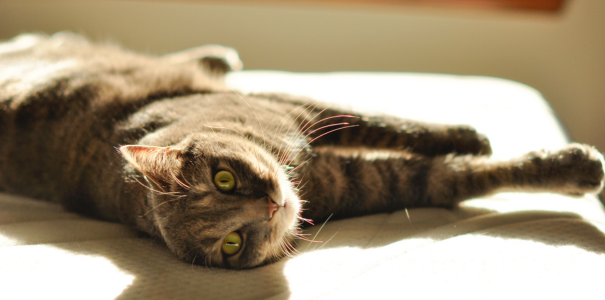
Seeing your cat roll onto their back can feel like an invitation for belly rubs. In reality, it’s usually something much more meaningful.
A cat exposing their stomach is demonstrating that they feel safe enough to reveal one of the most vulnerable parts of their body. It’s a huge sign of trust. But that doesn’t necessarily mean they want belly rubs. Many cats will happily show their tummy before gently reminding you that hands are not welcome. Each cat will have their preference, but we advise approaching belly rubs with caution.
Purring
Purring is one of the sounds we associate most with happy, content cats. Cats frequently purr when they’re feeling relaxed and enjoying your company. However, purring isn’t always a sign of happiness.
Cats may also purr when they’re frightened, injured, stressed, or even recovering from illness. Experts believe purring may have a calming or self-soothing effect, helping cats comfort themselves during difficult moments. Looking at the rest of your cat’s body language can help you understand what their purr really means.
Want to know more about purring in cats? Read on here.
Kneading
Does your cat press their paws into blankets, cushions, or even you? This behaviour, known as kneading or making biscuits, begins in kittenhood while nursing and often continues into adult cat life.
For many cats, kneading is a comforting behaviour that signals they’re feeling relaxed, secure, and content. If your cat chooses your lap as their favourite kneading spot, take it as a compliment, claws and all!
Play fighting or actual fighting?
Cats often wrestle, chase one another, and bat paws during play. Play fighting is usually quiet, with both cats taking turns chasing and wrestling before pausing to reset.
Real fighting looks very different.
Warning signs to look out for:
- Growling or yowling
- Puffed-up fur
- Flattened ears
- Stiff body posture
- One cat relentlessly chasing the other
- Attempts to escape without being allowed to
If you’re unsure whether your cats are playing or fighting, it’s usually better to interrupt calmly before anything escalates.
Speaking Cat
Understanding your cat’s body really comes down to looking at the whole picture. A swishing tail paired with relaxed ears may simply mean your cat is focused on a toy. The same tail alongside flattened ears, wide eyes, and a tense body tells a very different story.
The more time you spend observing your cat, the easier it becomes to recognise their unique way of communicating. Once you know what to look for, you’ll be amazed by just how much they have to say. It’ll be no time before you’re fluent in cat!