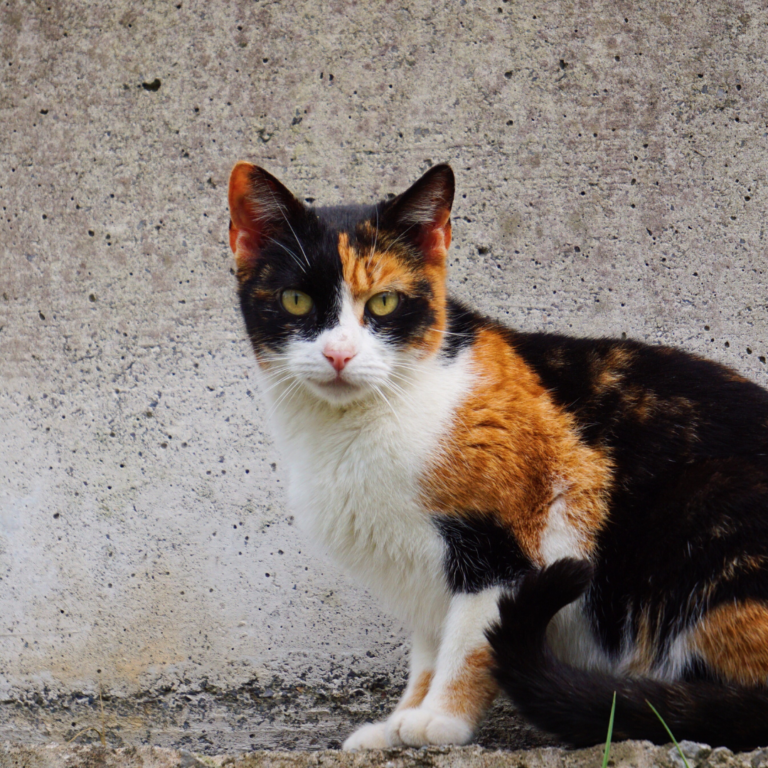



As the seasons change and the temperatures begin to drop, many cats start growing a thicker coat to help keep them warm. That extra fluff may look glorious, but it can also mean a little more work when it comes to cat grooming.
From seasonal shedding to sneaky knots hiding beneath all that fur, autumn and winter are a good time to give your cat’s coat a little extra attention. With regular brushing, a little patience, and plenty of opportunities for your cat to groom themselves, you can help keep their coat soft, healthy, and tangle-free throughout the colder months.
Why Does My Cat’s Coat Get Thicker in Winter?
You may notice your cat looking considerably fluffier as autumn arrives. This is because many cats naturally develop a thicker coat as the weather gets colder. Their fur provides insulation, helping them retain body heat and stay comfortable during the winter.
Indoor cats may experience less dramatic seasonal changes because they’re less exposed to the elements. But you may still notice an increase in shedding, or a change in the texture of their coat.
So if your sleek summer cat suddenly resembles a tiny cloud, there’s usually no need to worry. It’s simply their natural response to the changing seasons. So here’s how to keep on top of it:
- Brush Your Cat Regularly
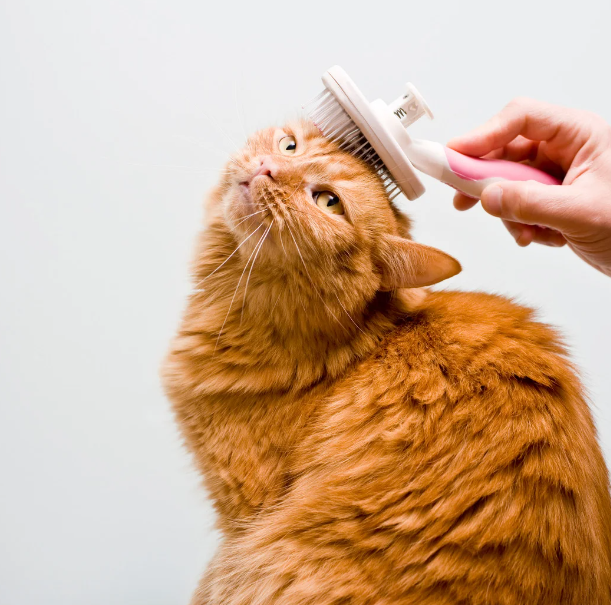
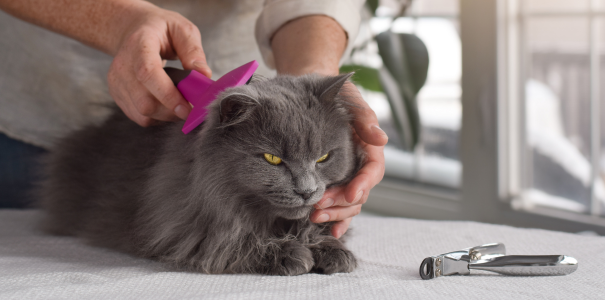
Regular brushing is one of the simplest ways to keep your cat’s coat healthy. Brushing removes loose fur before your cat can swallow it during grooming, helps prevent tangles and mats, and can leave their coat looking beautifully soft and glossy.
How often you should brush your cat depends on their coat type. Short-haired cats may only need brushing once or twice a week, while long-haired or particularly fluffy cats may benefit from daily grooming.
If your cat is new to brushing, start slowly. Keep sessions short, use a gentle brush, and reward your cat with treats or some fuss afterwards. Before long, they may decide that brushing is their personal spa treatment.
- Pay Extra Attention to Long Hair
Long-haired cats are particularly prone to knotting and mats, especially around areas where their fur rubs against their body.
Places to pay close attention to:
- Behind the ears
- Neck and chest
- Armpits
- Tummy
- Back legs
- Base of the tail
Mats can become uncomfortable and, if left untreated, may pull on the skin underneath them. If you find a small tangle, you may be able to gently work it apart with the appropriate grooming tool. Never pull at a mat or use scissors close to your cat’s skin, as it can be surprisingly easy to accidentally cut them.
Here’s more info on longer-haired felines. However, for larger or tightly packed mats, it’s best to ask a professional groomer or your vet for help.
- Don’t Forget About Shedding
A thicker winter coat doesn’t necessarily mean less fur around the house. In fact, seasonal shedding can leave cat parents wondering how one small animal is capable of producing quite so much fluff.
Regular brushing can help remove loose hair before it ends up on your sofa, clothes, and absolutely everything else you own. It can also reduce the amount of fur your cat swallows while grooming themselves, although some hairballs are unfortunately perfectly normal.
If your cat suddenly starts shedding much more than usual, develops bald patches, or has irritated or flaky skin, give your vet a call. Changes in the coat can sometimes be a sign of an underlying health issue.
- Does My Cat Need a Bath?
For most cats, regular bathing isn’t necessary. Cats are naturally excellent self-groomers, and a healthy cat will generally keep their own coat clean.
Most cats would strongly prefer that you don’t take them anywhere near a bath. If for any reason your cat does require a rinse, never use human shampoo on your cat, as their skin has different needs from ours.
- A Healthy Coat Starts From the Inside
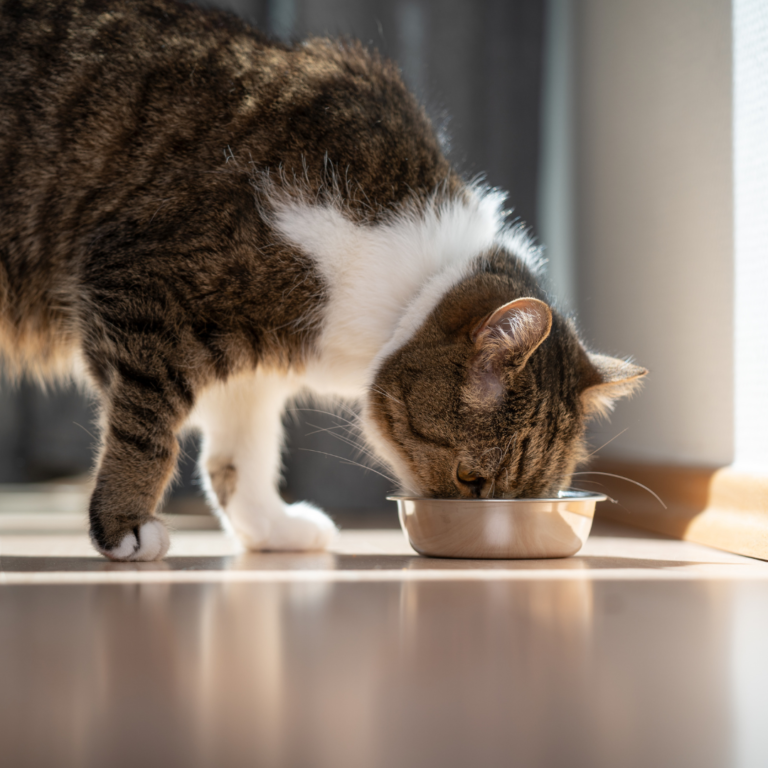
Good cat grooming isn’t the only way to support a healthy coat. A balanced, nutritionally complete diet provides the nutrients your cat needs to support healthy skin and fur. Fresh drinking water is important too, helping your cat stay hydrated throughout the year.
If your cat’s coat suddenly becomes dull, greasy, brittle, or unusually dry, don’t assume they simply need more brushing. Changes in coat condition can sometimes indicate that something isn’t quite right, so it’s worth speaking to your vet.
- Should You Trim Your Cat’s Fur in Winter?
It might seem logical that a long-haired cat needs a trim when their coat becomes particularly thick, but in most cases, their coat is perfectly capable of regulating their body temperature without our help. Avoid shaving or significantly trimming your cat’s coat unless your vet or a qualified professional groomer recommends it for a specific reason.
Instead, regular brushing is usually the best way to keep their winter coat healthy and free from mats.
- Make Grooming Positive
Perhaps the most important part of looking after your cat’s coat is making grooming something they enjoy. Choose a quiet time when your cat is relaxed and start with gentle, short brushing sessions. Let them sniff the brush before you begin and reward calm behaviour with treats, praise, or whatever form of affection they enjoy most. If your cat has had enough, stop and try again another time. It’s better to start off with small sessions to get them accustomed to a pamper.
As your cat’s winter coat comes in, a little extra attention can help keep them comfortable throughout the colder months. Regular brushing, checking for mats and providing a healthy diet are all easy ways to look after your cat’s coat. And while you may spend the next few months wondering how there can possibly be that much fur on one cat, remember that all those extra layers are doing an important job.
So grab a brush, find a cosy spot, and enjoy some bonding time with your favourite furry companion.